

Introduction
Someone thanks you almost every day. A friend thanks you for a favor. A coworker thanks you for help on a project. A customer thanks you for great service. Yet many people freeze up when it happens.
They mumble “no problem” and move on, even when the moment calls for something warmer. Learning how to respond to thank you is a small skill that makes a big difference in how people see you.
This guide walks through simple, natural ways to answer thank you in almost any setting. You will find casual replies for friends, polite replies for coworkers, and formal replies for clients and bosses.
Each section explains not just what to say, but why it works. By the end, you will never freeze up again when someone says thank you.
Why Knowing How to Respond to Thank You Matters
A thank you is a small gift. Someone took a moment to notice what you did and said it out loud. How you respond to thank you shapes the rest of the conversation. A flat reply can make the moment feel cold. A warm reply builds the relationship further.
Think about the last time someone thanked you, and you just said “yeah” or nothing at all. It probably felt awkward. Now think about a time someone replied with real warmth, like “It made my day to help you.” That reply likely made you feel closer to them.
Good replies also protect your reputation at work. Clients and managers remember how you carry yourself in small moments, not just big projects. A thoughtful reply to thank you shows confidence and warmth without sounding fake. It tells people you are paying attention.
Learning a few solid replies means you are never caught off guard. You will have a natural answer ready whether the thank you comes from a stranger, a close friend, or your boss.
How to Respond to Thank You in Casual Conversations
Casual settings call for short, easy replies. With friends, family, or people you know well, you do not need long sentences. You need warmth and ease.
A simple “you’re welcome” still works fine, but it can feel a bit stiff if you use it every single time. Mix it up with lines like “of course,” “anytime,” or “happy to help.” These replies keep the tone light and friendly.
If a friend thanks you for something small, like passing the salt or holding a door, keep it short. Try “no worries” or “sure thing.” These small replies match the size of the favor. A huge, dramatic reply to a tiny favor can feel odd or even sarcastic.
If the favor was bigger, like helping someone move or lending money, add a little more warmth. Say something like “I know you’d do the same for me” or “That’s what friends are for.” These lines show that the relationship matters more than the task itself.
Casual talk should feel natural, not scripted. Pick words that sound like you, not words copied from a guide. The goal of learning how to respond to thank you casually is to sound like yourself, only a bit more thoughtful.
How to Respond to Thank You at Work
Work settings need a slightly more careful tone. You still want warmth, but you also want to sound professional and steady.
When a coworker thanks you for help on a task, a good reply is “Glad I could help” or “Anytime, that’s what teammates are for.” These lines show teamwork without sounding stiff.
If your manager thanks you for finishing a project early, you might say “Thank you for trusting me with it” or “I’m happy it worked out well.” This shows humility while still owning your effort.
Below is a quick table of solid workplace replies you can use based on who is thanking you.
| Who is thanking you | Good reply | Tone |
| Coworker | Glad I could help | Friendly |
| Manager | Thank you for the chance to work on it | Respectful |
| Client | It was a pleasure assisting you | Professional |
| New employee | Happy to guide you; feel free to ask more | Supportive |
| Team in a meeting | We got this done together | Team-focused |
Notice that none of these replies are long. Work settings reward short, clear answers. Long, gushing replies can feel out of place in a busy office.
The key to responding to thank you at work is matching the tone of the room. A quick nod and a warm line usually beat a long speech.

How to Respond to Thank You in Emails
Email replies need a bit more structure than spoken replies, since there is no tone of voice to soften the words. Still, keep emails short. Nobody wants to read a long thank-you reply buried in their inbox.
A strong email reply usually has three parts. First, acknowledge the thank you. Second, add a short personal touch. Third, close with a friendly line or next step.
For example: “You’re very welcome! I enjoyed working on this with you. Let me know if you need anything else moving forward.”
If a client thanks you for finishing a project, you could write, “Thank you for your kind words. It was a pleasure working on this with your team, and I look forward to future projects together.” This shows gratitude back, which strengthens the business relationship.
If your boss thanks you in an email for extra effort, a good reply is, “Thank you for noticing. I’m glad the results turned out well, and I’m happy to keep supporting the team.” This response is confident but not boastful.
Knowing how to respond to thank you by email also means checking your tone before hitting send. Read it once out loud. If it sounds stiff or robotic, soften the words. Replace formal terms with everyday ones. Emails should still sound like a real person wrote them.
How to Respond to Thank You from a Customer
Customer service moments carry extra weight because they shape how people view your business. A good reply to a thank you here should feel personal, not scripted.
Instead of a flat “you’re welcome,” try “I’m so glad I could help you today” or “It was my pleasure to assist you.” These lines show that you care about the person, not just the transaction.
If the customer had a tough problem that took time to solve, add a line like “Thank you for your patience while we sorted this out.”
Businesses that train staff to respond warmly to thank you tend to see better reviews and more repeat customers. A short, kind reply costs nothing but leaves a strong impression.
If you run a shop, a call center, or an online store, teach your team a few solid lines they can use naturally, without sounding like a script.
Responding to thank you well in customer service also means avoiding overused phrases that sound hollow, like “no problem” repeated too often. Instead, vary your words so each reply feels fresh and sincere.
How to Respond to Thank You in Writing and Cards
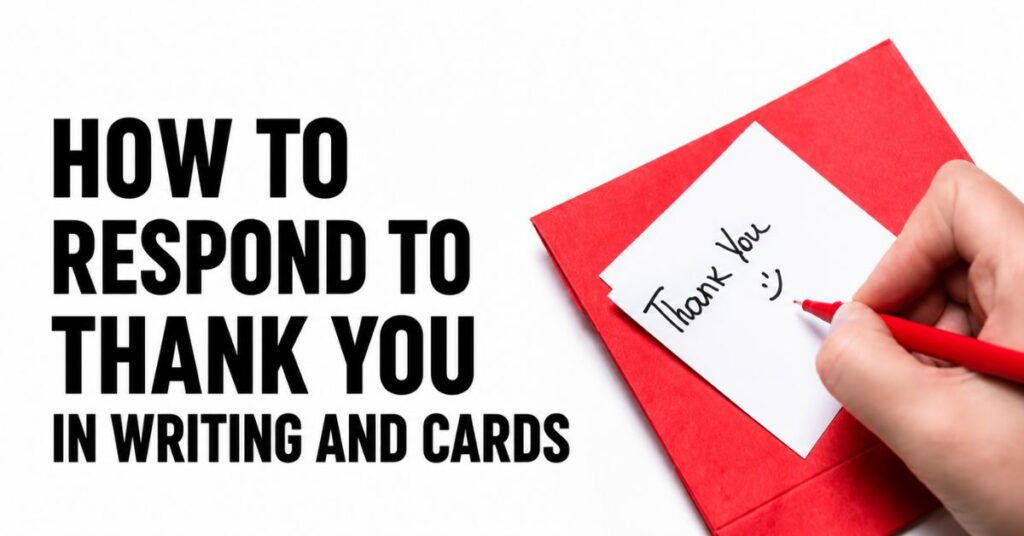
Sometimes a thank you comes through a card, a text message, or a handwritten note. These moments call for a slower, warmer reply since there is more time to think about the words.
If someone sends a thank-you card after a wedding gift or a favor, write something personal in return, such as “It meant a lot to be part of your special day” or “I was happy to help; you deserve it.” Personal replies feel more sincere than generic lines copied from the internet.
Text message replies can be shorter but should still carry warmth. A simple “Aww, of course! Anytime” works well between friends. For more formal texts, such as replying to a client, keep it clean: “You’re most welcome, glad everything went smoothly.”
The table below shows a few reply styles across different writing formats.
| Format | Example reply |
| Thank-you card | It truly meant a lot to help you through this |
| Text to a friend | Of course! Anytime you need me |
| Formal letter | Thank you for your kind words; it was my pleasure |
| Social media comment | So glad it helped, thanks for saying so |
Learning how to respond to thank you across different writing formats helps you match your tone to the medium, keeping every reply natural and fitting.
Common Mistakes When Responding to Thank You
Many people slip into a few habits that weaken their replies. One common mistake is repeating the same phrase every time, such as always saying “no problem.” This can start to sound careless, as if you are not really listening.
Another mistake is downplaying the moment too much, saying things like “it was nothing” when the favor actually took real effort. This can make the other person feel their thanks were not received well. Instead, accept the moment and let them know their thanks landed.
Some people also over-explain, turning a short reply into a long story about why they helped. This can shift attention away from the other person’s thanks and back onto yourself. Keep replies focused on them, not on you.
Finally, some replies sound robotic because they are copied word for word from templates. While guides can offer a starting point, always adjust the words to sound like your own voice. A thank-you reply should feel personal, even if it borrows a common structure.
Read more for info: https://responseburst.com/graduation-card-messages/
Building Your Own Style for Responding to Thank You
The best way to master how to respond to thank you is to build a small set of go-to phrases that match your personality. Pick two or three casual lines, two or three work lines, and one or two email lines. Practice them until they feel natural, not memorized.
Notice how people around you respond to thank you and borrow lines that feel authentic. Over time, you will naturally shift your reply based on the setting without even thinking about it.
The goal is not to sound perfect every time. The goal is to sound present and warm. A short, sincere reply will always beat a long, empty one. Once you build this habit, responding to thank you becomes easy and natural in any part of your life.
It also helps to pay attention to body language when you reply in person. A small smile or a nod adds warmth to even the simplest words. Saying “you’re welcome” while looking away can feel cold, but the same words with a genuine smile feel much warmer.
Tone of voice matters too. A soft, calm tone shows sincerity, while a rushed tone can make your reply feel like an afterthought. Over time, you may notice that different cultures and workplaces have their own habits around how to respond to thank you.
Some places prefer humble, quiet replies, while others enjoy longer, more expressive exchanges. Paying attention to these small local habits helps your reply feel natural wherever you are.
If you travel for work or talk with people from different backgrounds, a little awareness goes a long way toward sounding respectful and warm.
In the end, responding to thank you well is less about finding the perfect line and more about staying present in the moment. When you truly listen to the person thanking you, the right words tend to come naturally, and your reply will always land the way it should.
Conclusion
Knowing how to respond to thank you is a small skill, but it shapes how people see you in almost every part of life. A quick “no problem” will always work, but a little warmth turns an ordinary moment into a real connection.
Whether you are talking to a close friend, replying to a client’s email, or thanking a customer for their patience, the right words make the exchange feel personal rather than routine.
The examples in this guide give you a starting point for casual chats, workplace exchanges, emails, customer service, and handwritten notes.
Use them as a foundation, then adjust the wording until it sounds like your own voice rather than a script. People notice sincerity far more than perfect phrasing.
Over time, responding to thank you well becomes second nature. You will find yourself picking the right tone without even thinking about it, whether the moment calls for something short and light or something warmer and more personal.
Master this small habit, and you will never freeze up again the next time someone says thank you.
Frequently Asked Questions
What is the best way to respond to thank you casually?
Keep it short and warm. Simple lines like “of course” or “anytime” work well with friends and family, since they match the easy tone of everyday talk.
How do I respond to thank you in a professional email?
Acknowledge the thanks, add a short personal note, and close with a friendly line. Keep the email brief and avoid stiff or overly formal wording.
Is it rude to just say “no problem” every time?
It is not rude, but repeating it too often can feel careless. Mixing in different replies shows more thought and keeps your responses feeling sincere.
How should a business respond to customer thank-yous?
Businesses should use warm, personal replies instead of flat scripts. Lines like “I’m glad I could help” build trust and encourage customers to return.
What should I avoid when responding to thank you?
Avoid repeating the same phrase constantly, downplaying your effort, over-explaining, or copying templates word for word. Keep replies short, sincere, and personal to you.